

Theoretical surfing lesson: Understanding waves to surf them better
5 Things to do in Corralejo, Fuerteventura during your Surf Stay
[kkstarratings]
Often referred to as Europe’s answer to Hawaii, the Canary Islands certainly have the best and most consistent surf spots in Europe throughout the year. Its northern tip is ideally exposed to the west, north and east, making it a paradise for learning to surf as there is always a spot exposed to small swells, or, conversely, a fallback spot when the swell is strong.
Many people claim that Fuerteventura is the jewel in the crown of the Canary Islands. It is the second largest island in the Canaries, after Tenerife. It remains relatively unspoilt and peaceful, although its popularity is growing every year. During the winter months, the beautiful Canary Island of Fuerteventura is lit up by swells from the Atlantic, creating excellent waves for everyone from beginners to expert surfers. To help you decide where to spend your next holiday at our Fuerteventura surf camp on this sunny island, here are our favourite surf spots around the island.
Fuerteventura has an arid, almost lunar landscape and is home to many more white sandy beaches than the other islands. Strong winds are part of the landscape, making this island a world-renowned windsurfing spot. The north coast is dotted with exposed reefs that absorb all the swells from west to east, and the waves vary in intensity, from the tubes of Lobos to the gentler waves of Derecha de los Alemanes. Here is an overview of the different spots for learning to surf in Fuerteventura:
Contenus de la page
What is the best season for surfing in the Canary Islands?
For surfing, the season with good waves for intermediate to advanced surfers is from September to March. Beginners will find good waves all year round thanks to the island’s ideal configuration, which means you can always find an exposed spot when there is little swell, or a sheltered spot on days when the swell is strong.
The west of Fuerteventura: Cotillo
Located on the north-west coast, facing the Atlantic Ocean, El Cotillo is described by many as the jewel of Fuerteventura. The main beach is a beach break with some large pebbles. To the south, Cotillo is isolated and the currents can be extreme. The extreme south has some quality waves that await the right conditions.
This charming village is located on the northern tip of the island and is becoming a very popular tourist destination in Fuerteventura. El Cotillo is a very small village, but you can find many good seafood restaurants there. Locals come here on weekends to spend a day on one of El Cotillo’s beautiful beaches and enjoy a fantastic meal with their families. El Cotillo also owes part of its popularity to La Concha beach, which feels like a tropical paradise.
Some of the island’s most beautiful beaches are located on either side of the village. The village has two ports. The old port, which is only used once a year during the festival, and the new port, which is still used by local fishermen. A fish market has been built on the quay of the new port, but it is not yet open. When visiting Fuerteventura for the first time, people often stay elsewhere: in Corralejo or Caleta de Fuste. Then they discover Cotillo on a day trip from Corralejo by bus, coach or buggy, or on a trip in a hire car, and quickly fall in love with it… It is certainly a place with a lot of charm and many of them return year after year, often several times a year. It is the ideal place for a relaxing holiday. You won’t find any nightclubs, but there are some very good bars and restaurants with a wide variety of choices.
Cotillo is ideal for watching the wonderful sunsets that occur here due to its westward orientation. What could be more pleasant than sitting outside a bar or restaurant with your favourite drink while watching the sun go down? There are many places to do this in the old port and elsewhere.
For those who enjoy lying in the sun and relaxing, this is the ideal place. But there is also plenty to do for more active people. This ranges from water sports such as surfing, windsurfing and kitesurfing to cycling. La Concha Fuerteventura beach is probably the most popular of the beaches in the El Cotillo lagoon. It is just north of the village, on the road to the lighthouse or a beautiful walk along the small beaches before the village.
It is protected from large waves by rocky reefs just offshore and has beautiful sand. This makes it ideal for swimming and snorkelling. During spring tides, a shallow lagoon forms just behind the beach, which is ideal for young children.
El Cotillo Beach Break for beginner surfers
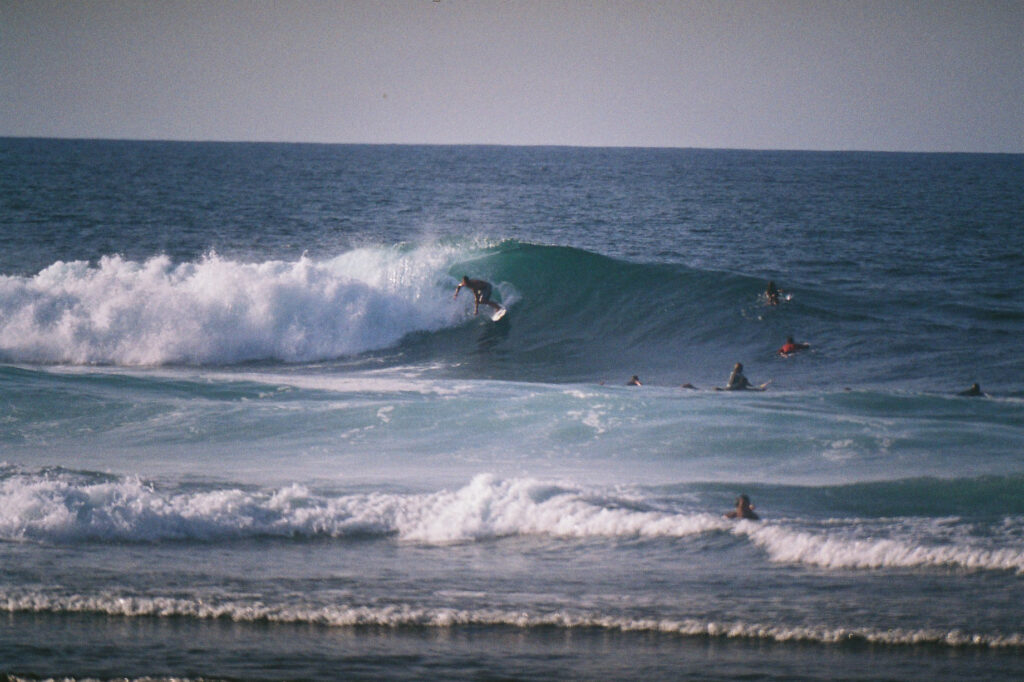
This is probably the most popular beach break in Fuerteventura. It is a long sandy beach offering left and right waves. It is a perfect spot for intermediate surfers, but can also be used by beginners; the long waves are ideal for learning to surf.
Everything’s fine, it’s great here. The weather is quite warm and windy, but that’s okay. The waves are a bit strong, but I’ve made progress ;). – July 2018, Laura from Brittany
El Cotillo Reef Break for intermediate surfers
Located north of the port of Cotillo, Spew Pits is a spot reserved for advanced surfers. This spot usually has waves, but it tends to be flat during the summer.
The beaches of northern Fuerteventura
On the island of Fuerteventura, whose coastline is mainly lined with beaches, the north coast is full of reefs exposed to north and north-westerly swells and waves. It also enjoys the status of a wild refuge, much appreciated by surfers in search of peace and sunshine. In the middle of this rugged north coast, the town of La Oliva, which is fairly well known but little visited, is an enclave and a break in this extraordinary landscape.
One of the most popular waves in Fuerteventura is located at El Hierro, near Majanicho beach. It owes its reputation to the regularity and quality of its breaking waves.
Majanicho surf spot, north of Fuerteventura
Best time to visit: October to April.
In the middle of northern Fuerteventura, in a bay, lies the small fishing village of Majanicho. In the flat bay, the waves break on deep-water reefs. The long, clean right-hand side ends in the bay. A very easy spot, also very suitable for beginners on small days. Depending on the tide, Majanicho can handle waves of up to 2.5 metres or more. On days with huge tides and low tide, the wave can close on the other side of the bay. This is when a few locals go out to surf. It is mainly a winter spot when the trade winds come more from the east and are strengthened by the channel between Lanzarote and Fuerteventura.
The Right Wing of the Germans
It is a steep reef break on the right that catches all swells from north to west. On a good day, you can score a few tube sections. With a big swell from the west, the German right is often the only place where you can ride on the north shore. On smaller days, you can also surf a shorter left-hander. Best at low tide. Surrounded by a beautiful sandy beach, it’s the ideal spot for surfers who enjoy camping.
Genarosa
Genarosa is an exposed reef with reliable surf. Although it is generally flat in summer, it works best in winds. Surfable at all stages of the tide, it can sometimes get quite crowded here.
Playa Morro aka Drop Beach
Sandy beach that catches the swell from a north-easterly wind. Left and right waves, there are rip currents at each end of the beach that are clearly marked with flags. A good beach for non-surfing partners who just want to enjoy the sun!
To the east of Fuerteventura : Corralejo
Corralejo is a town located on the northeast coast of Fuerteventura.
It is known for the Corralejo Natural Park, with its windy beaches and dunes such as Playa del Moro. The park is home to endangered wildlife and Montaña Roja, a volcano with panoramic views. The town, a former fishing village, is dotted with restaurants and bars. Nearby, the island of Lobos is a nature reserve with a multitude of rare birds. Corralejo is the busiest and largest tourist resort on Fuerteventura, which continues to grow in size while retaining its original charm as a fishing village. The old town is located next to the harbour and has a church and a square, which is now the centre of Corralejo’s nightlife.
The main attractions of Corralejo are the 7-mile-long Playa Grande beach and the sand dunes located south of the town. A lively harbour where you can enjoy all kinds of water sports or take one of the many boat trips, glass-bottom boats, ferries to other islands, fishing trips, sailing trips or scuba diving trips, many of which can be booked online. A pleasant seafront promenade with bars, restaurants and shops.
A pleasant nightlife with numerous bars, restaurants and even nightclubs, the best nightlife on Fuerteventura. The centre of this square is the main square, nicknamed “Music Square”.
Three smaller beaches located around the town centre
Among its white sandy beaches, you will find cafés and restaurants; ideal for recharging your batteries, relaxing and enjoying the wonderful climate. When it comes to accommodation, there are many excellent hotels and villas, ensuring visitors have a first-class experience in Corralejo.
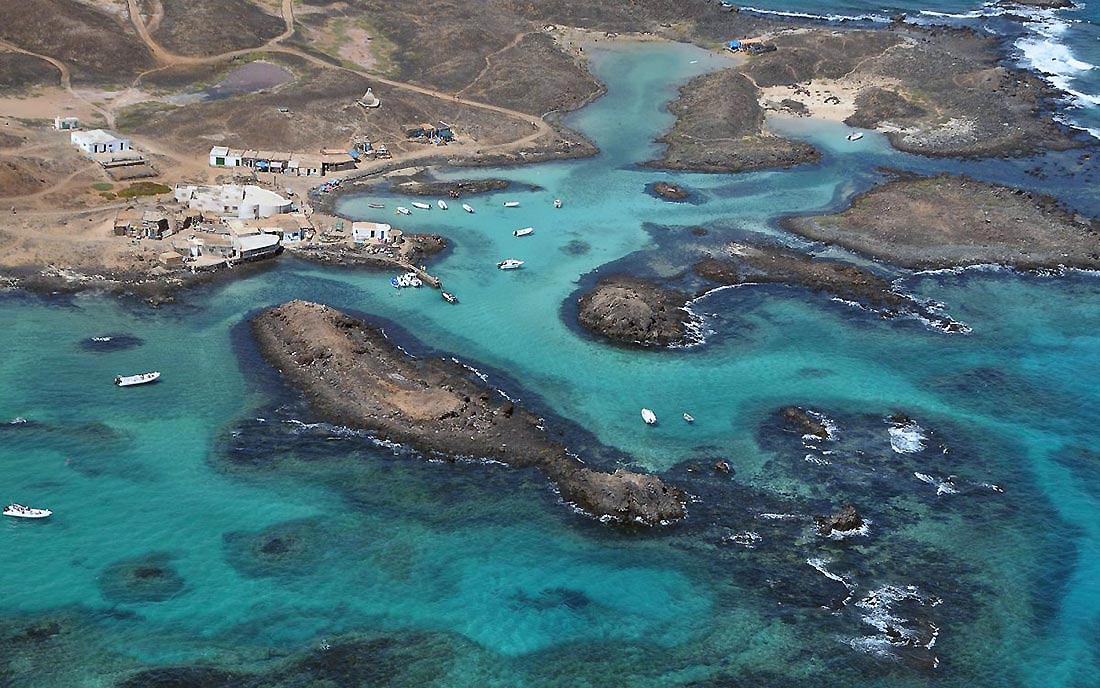
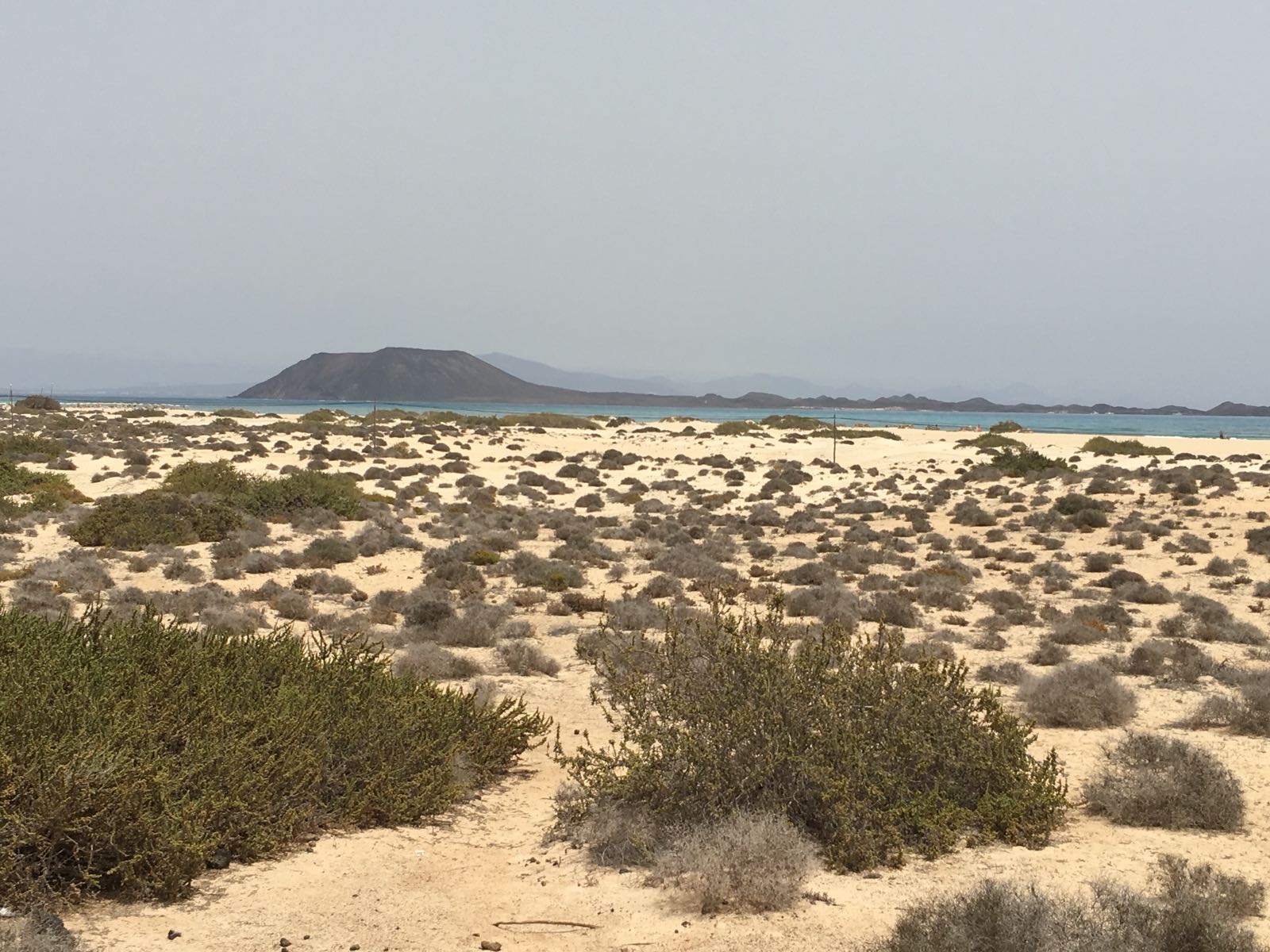
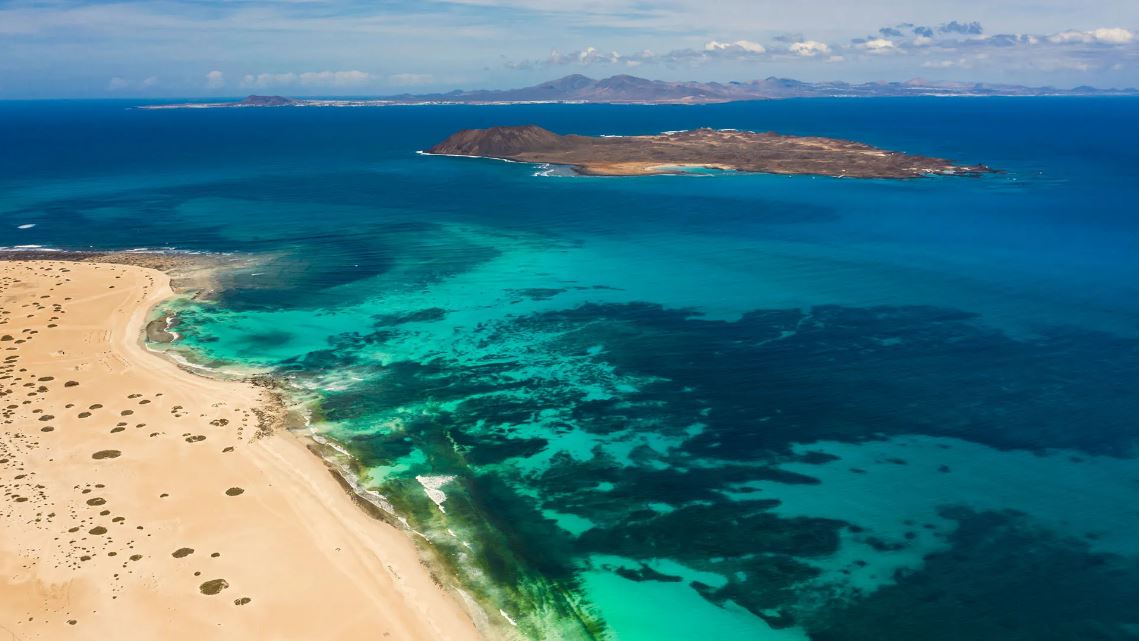
Corralejo is located in the north-east of Fuerteventura, just opposite the small island of Los Lobos, whose silhouette is clearly visible on the horizon and forms an important part of the surrounding landscape. You can take a boat from the port of Corralejo and spend the day in Los Lobos, or even cross over to Lanzarote. The maritime atmosphere of Corralejo’s old town is perfect for a pleasant stroll, where you can spend time sampling fresh fish and local wine in the town’s restaurants.
Flag beach
Surfing and kitesurfing alongside international restaurants. To get in shape, nothing beats surfing or kitesurfing, which are very popular in certain areas of Corralejo because they provide the perfect conditions for these sports.
A reef break that breaks the water abundantly, the large outer peaks turn into manageable lefts and rights on the inside. A good place to head to when the north track has a big swell rushing in, it’s best to surf from mid-tide to high tide. The slow walls on the left are perfect for a longboard or mini-malibu.
Best time to visit: spring, summer and autumn, with sunshine almost guaranteed in summer and winter alike!