



Bidart: The 10 Best Hotels with Ocean Views
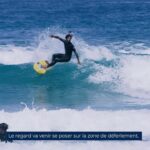
24. The Front Cutback: Returning to the Heart of the Wave

In surfing, there is that magical moment when you have to leave the power zone… only to return to it. That is exactly the role of the second turn in the cutback: a precise, fluid, almost dance-like movement that brings you back towards the breaking wave in order to regain speed. That is when the manoeuvre takes on its full meaning and really comes to life.
A successful cutback is not just about the first arc-shaped turn. The real difficulty and beauty lies in the second rotation, which repositions the board on the slope. This moment requires perfect timing, consistent physical commitment, and a keen understanding of the wave. It’s not just about turning: it’s about synchronising your movement with the energy of the ocean.
Contenus de la page
1. Adjust your turn to the power of the wave
As the wave approaches, it changes: the water becomes more agitated, the slope steeper, the energy more concentrated. Your second turn must therefore adapt. The more powerful the wave, the more precise and compact your turn must be… while remaining mobile.
The objective: to return exactly to the point where the wave breaks in order to take off again with maximum speed.
Beginners’ special: how to do a cutback without losing speed
The cutback is a magnificent manoeuvre… the most beautiful when you come back on the wave floating above the curl… but also an area where many beginners get caught out. To avoid coming to a sudden stop or getting stuck in the foam, here are the key points to remember:
1. Do not turn too late.
Many beginners wait until they are already in the foam to start the second turn. But once in the turbulence, the board slows down, balance becomes unstable and all momentum is lost.
👉 Anticipate the turn before entering the foam, when the wave is still smooth and buoyant.
2. Keep your eyes in the right direction
When riding backside, your gaze is even more crucial: if you look at your feet or the water right in front of you, you close the trajectory and come to a halt.
👉 After the rotation, aim for the bottom of the wave: this is your acceleration point and your clean exit.
3. Really use your arms
The backside cutback becomes impossible with your arms stuck to your body. The front arm opens up the trajectory, while the back arm balances the rotation.
👉 Remember to surf big, open and free, with your arms naturally guiding your shoulders.
4. Be mindful of weight transfer
If you stay on your back foot for too long, the board will stall and the turn will break.
👉 As you come back down, gently shift your weight forward to pick up speed again and come out of the manoeuvre cleanly.
5. Do not force the board: guide it.
A successful cutback is never a sudden movement. Too much force = rail lock-up and fall. Opt for a fluid motion, with the rail well engaged and your legs actively adjusting, not forcing.
6. Keep your legs light
Stiffening up locks up the board, especially in backside turns where the rail needs to breathe.
👉 Maintain dynamic flexion: bend to engage, extend to lighten, like a spring that accompanies the wave without resistance.
2. Anticipate rotation before turbulence
You shouldn’t wait until you’re in the foam to turn: it’s too late. The turn should be anticipated just before contact, when the wave starts to build.
- Your body is preparing itself:
- all eyes are already turning towards the descent,
- your bust follows,
- your rail is being installed.
You become proactive, not reactive: that’s the difference between a smooth cutback… and a forced cutback.
3. The role of the gaze and the front arm
Your gaze is the conductor. It moves towards the bottom of the wave to indicate the trajectory. Your front arm acts as a guide. Strong and firm, it sets the direction and pulls your entire upper body into the rotation.
Surfing is a chain reaction sport: if your gaze and shoulders are correctly aligned, your hips will follow, your legs will react, and the board will turn naturally.
4. The rear arm: balance and continuity
In this phase, your back arm is never passive.
- It accompanies rotation, stabilises your centre of gravity and allows you to maintain a solid posture. It acts as a dynamic counterweight: neither too tense nor too relaxed.
5. Keep speed as the top priority
The key to the cutback is really speed.
- Lose it, and the manoeuvre falls apart: you stop, you sink, or you get stuck in the foam.
- Keep it, and you will reappear on the slope with a clean and natural rebound.
To maintain your momentum:
- remain fluid,
- keep your legs active,
- avoid sudden movements,
- and let the wave do some of the work.
The second turn is not a break: it is a reconnection with the wave.



Improve your surfing by incorporating mobility exercises and yoga
Lire la suite