


How do you choose a good surf camp for your child?

Les Casernes in Seignosse: the perfect spot to learn to surf at your own pace
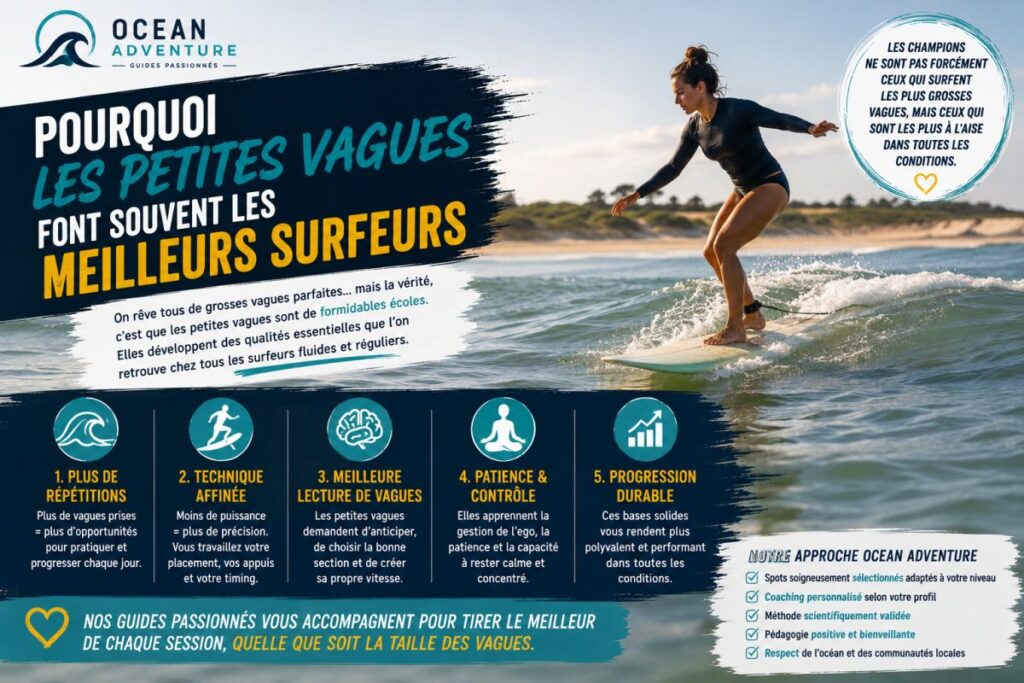
When you’re just starting out in surfing, it’s natural to watch videos and look through magazines showing professionals riding down impressive walls of water with admiration. You might be tempted to want to tackle bigger waves straight away, thinking that’s what proves your ability. However, rushing into things like this is often the main reason why your progress stalls.
At Surf & Yoga Camp Hossegor, we take a different, sometimes counter-intuitive approach to teaching: small waves are the secret training ground for the best surfers. You’ll discover why learning and practising on gentle, gradual waves is the most effective way to develop your technique and build your confidence.
Contenus de la page
The pitfall of big waves when it comes to learning
Imagine having to learn to drive on a motorway jammed with traffic in the rain. That’s exactly the challenge you’ll face if you tackle a powerful spot too quickly, whether you’re a beginner or an intermediate surfer. Faced with a fast, hollow wall of water, your reptilian brain takes over.
This instinctive reaction has several negative effects: stress paralyses you; you stop reading the wave and focus solely on survival. Your paddling becomes erratic, your take-off is rushed, and your bad habits become ingrained. For example, you often adopt a hunched posture, looking down and with your weight shifting unsteadily, which seriously undermines your balance and fluidity.
“Surfing a wave that’s too difficult for your level isn’t surfing – it’s a matter of survival.”
Under these conditions, the time spent standing on the board – which is when you actually learn – is virtually zero. You expend a great deal of energy paddling against the current and battling the sets of waves, which are often compared to ‘washing machines’ and prevent you from making effective progress.
The science of repetition in a controlled environment
As with any technical sport, your progress in surfing depends on muscle memory. For a movement to become fluid and instinctive, it must be repeated correctly many times. This is where small waves really come into their own.
A gentle wave, measuring between 80 centimetres and one metre, offers you an invaluable advantage: time. This time allows you to observe, adjust and incorporate your movements with complete peace of mind.
| The benefits of a small wave | The impact on your technique |
|---|---|
| Reduced speed | You can position your hands correctly for a controlled take-off. |
| A gentle slope | You don’t feel as though you’re falling into the void, which encourages you to keep your eyes raised. |
| A long shoulder | You’ve got plenty of space to practise your first turns, such as the bottom turn. |
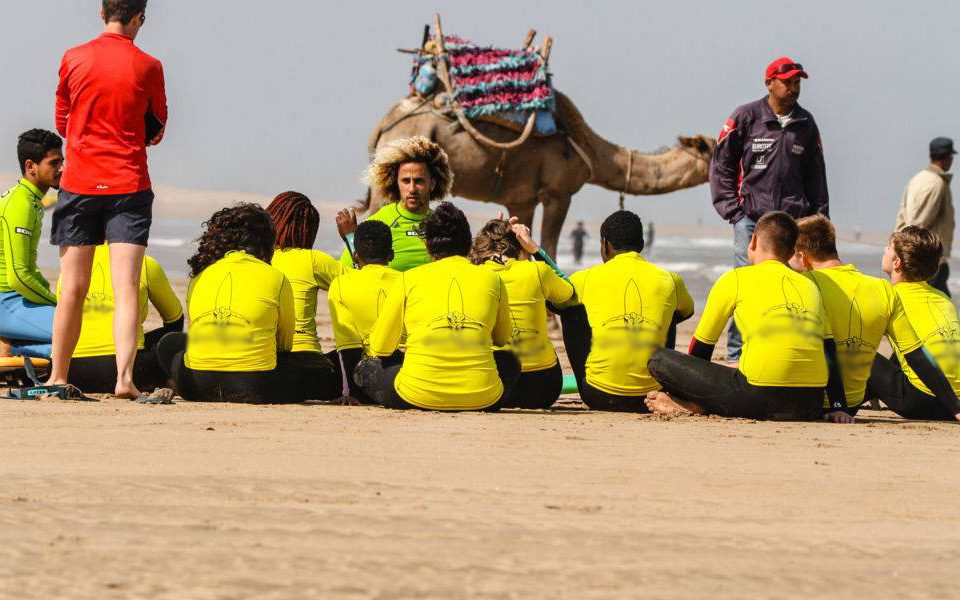
On waves like these, our instructors can keep a close eye on you. Thanks to our small groups of 5 to 8 people, you’ll receive immediate feedback. You can put the corrections into practice on the next wave, without any pressure or rush.
This approach is based on the principles of sports physiology, which emphasise the importance of repetition in a suitable environment for developing fine motor skills and neuromuscular coordination[1].
Casernes Beach: an ideal testing ground
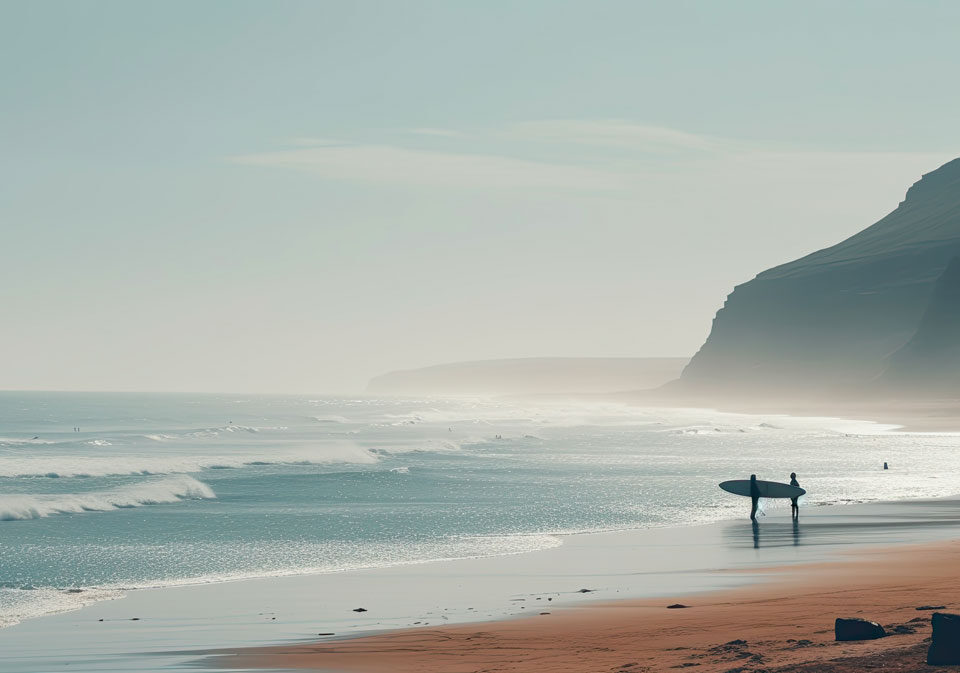
Our choice of spot is based on a thorough understanding of the biomechanics of learning. We don’t take you to the powerful barrels at the centre of Hossegor. Instead, we prefer the Casernes beach in Seignosse, a wild and unspoilt spot, renowned for its sandbanks which create gentler, longer waves.
Whether you’re surfing in the ‘foam’ (those waves that have already broken, ideal for your first few days) or venturing further out to sea on smooth swells to perfect your turns, the ocean is always forgiving here. This gentle environment helps you pace yourself better and adapt gradually to the ocean, which is essential for your safety and enjoyment.
“The best wave isn’t the one that looks most impressive in a photo; it’s the one you ride all the way to the shore with a smile on your face.”
The conditions at Casernes Beach are perfectly in line with the oceanographic principles that explain the formation and breaking behaviour of waves, in particular the topography of the sandy seabed, which reduces the power of the waves[2].
Video analysis to improve your training
The educational value of small waves is greatly enhanced by our flagship tool: video analysis. By filming you on waves where you have time to break down your movements, we can identify the subtle details that are holding back your progress.
Is your back foot positioned incorrectly? Are your shoulders not turning in the direction of the wave? By watching your mistakes on video during our debriefings at the Surf Villa, you’ll understand exactly what needs adjusting. As the waves at Les Casernes are consistent and accessible, you can put these corrections into practice straight away, in a relaxed and safe environment.
Be prepared to slow down so you can pick up speed later. Leave your ego on the beach, enjoy the gentle waves of the Landes coast, and come and join us in laying the foundations for a solid, elegant and sustainable surfing style.