
A traditional summer camp or Colo Surf? A different kind of adventure!
Why small waves make for better surfers
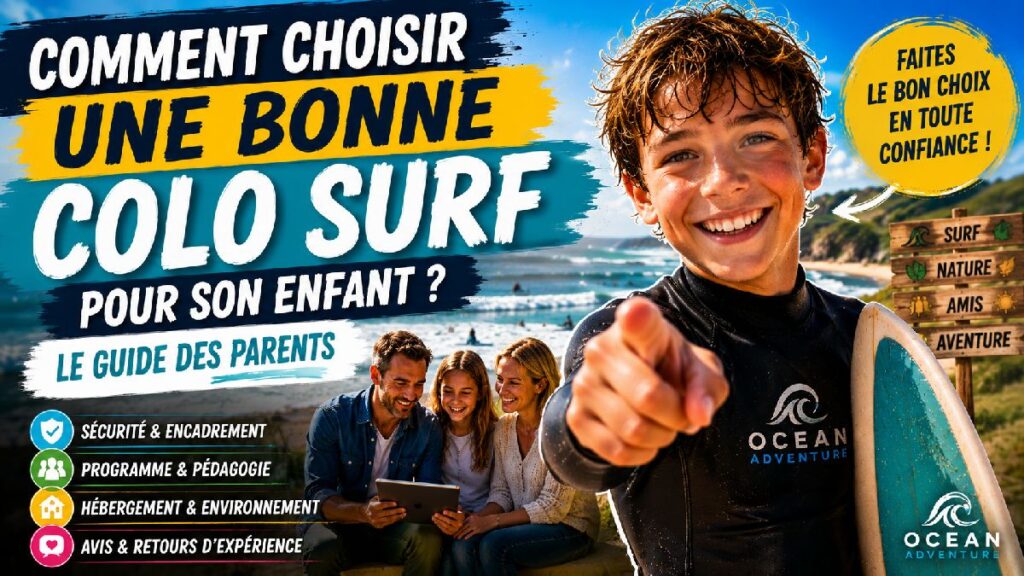
As parents, you want to give your children enriching experiences, lasting memories and opportunities to grow. The idea of a surf camp may seem idyllic: waves, sunshine, new friendships… But how can you ensure that this adventure is not only fun, but also safe, educational and perfectly suited to your child?
Choosing a surf camp is an important decision that deserves careful consideration. This comprehensive guide is designed to take you through the process step by step, helping you find that hidden gem that will make your young surfer’s eyes light up.
Contenus de la page
Chapter 1: Understanding your child’s needs and wishes
Before delving into the technical and logistical details, the first – and undoubtedly the most crucial – step is to consider your child’s personality and aspirations. Every young person is unique, with their own interests, level of independence and concerns. You need to ask yourself the right questions to narrow down your search.
Assessing genuine interest in surfing
Is your child genuinely passionate about surfing, or is it an idea you’ve suggested to them? Intrinsic motivation is essential to ensure they get the most out of their stay. You can observe their behaviour: are they fascinated by surfing videos? Do they often talk about the ocean? The desire to discover this sport must come from them so that they can fully commit to it and reap all the benefits. If their interest is new, a gentle and gradual introduction will be more appropriate.
Take age and maturity into account
Your child’s age is a key factor. Surf camp programmes are often tailored to specific age groups. An 8-year-old will not have the same needs as a 15-year-old teenager. For younger children, the length of the stay, the staff-to-child ratio and the availability of a variety of activities are essential criteria. Teenagers, on the other hand, will be looking for greater independence, more intensive surfing sessions and opportunities to socialise with their peers. You must ensure that the programme is suited to their emotional and physical maturity.
Identify your surfing ability and your goals
Is your child a complete beginner, do they already have some basic skills, or are they an experienced surfer? Most surf camps offer groups organised by ability level, but it is important to check that the school is able to provide suitable instruction. For a beginner, the focus will be on safety, experiencing the initial sensation of riding the waves and learning the basics. For more advanced surfers, the aim will be to refine their technique, learn new manoeuvres and understand the intricacies of the ocean. You should discuss with your child what they hope to achieve during this surf camp.
“A child’s engagement in a sporting activity is maximised when the activity matches their interests and perceived level of ability, thereby fostering a sense of autonomy and mastery.” [1]
At Ocean Adventure, we understand the importance of this personalised approach. Our programmes are designed to cater for every age group and ability level, ensuring that your child feels at home and progresses at their own pace, in a stimulating and supportive environment.
Chapter 2: The cornerstones of a successful surf camp: Safety, Supervision and Teaching Methods
Although surfing is a source of joy and a chance to push oneself to new limits, it is an activity practised in a powerful and sometimes unpredictable natural environment: the ocean. Your child’s safety is therefore the top priority. You must ensure that the surf camp you choose has strict safety protocols in place and provides high-quality supervision.
Safety first: Clear protocols and suitable equipment
A good surf camp is characterised by its unwavering commitment to safety. This starts with the choice of surf spot, which must be suited to the participants’ ability and the day’s weather conditions. The waves must be of a reasonable size, the seabed sandy, and the surfing area supervised. You should enquire about emergency procedures and whether there are staff trained in first aid and water rescue.
Equipment also plays a crucial role. Foam boards (softboards) suited to the child’s height and weight, neoprene wetsuits to protect them from the cold and chafing, and leashes in perfect condition are essential. For younger children or in specific conditions, wearing a buoyancy aid or a helmet may be recommended. You must ensure that the equipment is regularly inspected and maintained.
“Safety in water sports for children depends on a combination of factors: a controlled environment, suitable equipment and constant supervision by qualified professionals.” [2]
Qualified and caring support
The staff are at the heart of a successful surf camp. Instructors must hold the necessary qualifications (such as the Brevet d’État or certifications recognised by the French Surfing Federation) and have solid teaching experience with children and teenagers. Beyond technical qualifications, their ability to build trust, motivate young people and manage groups is essential. You should pay attention to the supervisor-to-child ratio, which must be low enough to allow for individual attention and effective supervision.
At Ocean Adventure, our instructors are not only passionate, qualified surfers, but also experienced teachers. They are trained to tailor their teaching to each child, ensuring that everyone feels safe, supported and encouraged at every stage of their learning journey.
A teaching approach tailored to learning to surf
The teaching approach used is a key factor in your child’s learning and personal development. A good surf camp doesn’t just teach technique; it also instils the values of surfing: respect for the ocean, perseverance, humility and team spirit. The approach must be progressive, fun and tailored to each child’s pace. Theory sessions on wave formation, currents and right-of-way rules are just as important as practical sessions in the water.
You must ensure that the camp offers a programme that goes beyond simply surfing, incorporating elements of marine environmental awareness and personal development. The aim is to train independent and responsible surfers who are able to read the ocean and make informed decisions.
“An effective educational approach to sport for young people incorporates not only the acquisition of technical skills, but also the development of self-confidence, resilience and a thorough understanding of the sporting environment.” [3]
We pride ourselves on developing innovative teaching methods that combine enjoyment, progress and respect for the ocean. Our programmes include workshops to raise awareness of marine ecology and opportunities for discussion to strengthen group cohesion, making every trip a well-rounded and memorable experience.
Chapter 3: Beyond the Waves: The Unexpected Benefits of Surfing for Your Child’s Development
Surfing is much more than just a sport; it’s a life lesson that offers a host of benefits for your child’s physical, mental and emotional development. By choosing a surfing holiday camp, you’re giving them a unique opportunity to grow and flourish.
Physical development and coordination
Surfing is a full-body workout. Your child will develop their muscle strength, particularly in their arms and core, to paddle and stand up on the board. Balance and coordination are constantly put to the test, thereby improving their proprioception and body awareness. Surfing is a well-rounded activity that contributes to excellent physical fitness, away from screens and out in the fresh air.
Self-confidence and resilience
Every wave they catch, every fall they overcome, every bit of progress, however small, boosts your child’s self-confidence. Learning to read the ocean, anticipate the waves and get back up after a fall teaches them resilience and perseverance. They will learn to face challenges, cope with frustration and celebrate their victories – valuable skills that will serve them well far beyond the beach.
“Taking part in outdoor sporting activities, such as surfing, has been linked to a significant improvement in self-esteem, reduced stress and the development of social skills in children and adolescents.” [4]
Connection with nature and environmental awareness
Surfing offers a total immersion in nature. Your child will develop a deep connection with the ocean, its tides, currents and wildlife. This closeness to the marine environment fosters environmental awareness and a desire to protect the oceans. Many surf camps incorporate environmental awareness activities, thereby transforming the process of learning to surf into a genuine education in environmental citizenship.
At Surf & Yoga Hossegor, we firmly believe in the educational benefits of surfing. Our programmes are designed to maximise these benefits, providing an environment where your child can push their physical limits, build mental resilience and develop a deep respect for the natural world around them.
Chapter 4: The Ideal Setting: Why the Choice of Location Is Crucial
The location of the surf camp is a key factor that will have a major impact on your child’s experience. The Landes region, and more specifically Seignosse/Hossegor, offers an exceptional setting for surfing and for young people to thrive.
Surf spots suitable for all levels
The Landes coast is renowned for its fine sandy beaches and world-class waves. In Seignosse and Hossegor, you’ll find a variety of spots suitable for both beginners and more experienced surfers. The sandbanks create gentle, consistent waves, ideal for learning, whilst other spots offer more challenging conditions for those looking to improve their skills. This variety ensures that your child can progress at their own pace, in conditions that are always suited to their level.
A preserved and stimulating natural environment
Beyond the waves, our surf camp is a veritable haven of greenery. The vast pine forests, lakes and cycle paths offer plenty of opportunities for activities to complement surfing. Your child will be able to enjoy fresh air, open spaces and bountiful nature, perfect for relaxation and exploration. This healthy and stimulating environment contributes to general well-being and helps you switch off from everyday life.
An authentic surfing culture and a friendly atmosphere
The spots where we surf are some of the top destinations for surf culture in Europe. The atmosphere there is relaxed, friendly and steeped in the spirit of surfing. Your child will be immersed in an environment where respect for the ocean and a passion for surfing are ever-present. They’ll be able to meet other young people who share the same interests, forge bonds and enjoy a rewarding social experience.
By choosing Ocean Adventure, you’re opting for an iconic surfing destination, where the quality of the waves blends with the beauty of the scenery and a unique atmosphere. We offer an idyllic setting for your child to enjoy an unforgettable surfing holiday, combining learning, discovery and moments of togetherness.
Conclusion: Make the right choice for an unforgettable experience
Choosing the right surf camp for your child is a decision that requires careful thought. By taking their wishes into account, prioritising safety and high-quality supervision, and choosing a setting that fosters personal development, you’ll give them the best possible chance of a memorable experience.
Surfing is a life-changing adventure. It teaches essential values, develops valuable skills and creates lasting memories. By entrusting your child to Surf & Yoga Hossegor, you are choosing a team of passionate professionals, an exceptional setting in the Landes, and a programme designed to combine fun, safety and progress.
Don’t wait any longer to give your child the chance to enjoy a unique experience. Contact us today to find out about our programmes and book their place on a surf camp that will change the way they see the world and themselves. Adventure awaits!
References
- [1] Deci, E. L., & Ryan, R. M. (2000). The “what” and “why” of goal pursuits: Human needs and the self-determination of behavior. *Psychological Inquiry*, 11(4), 227-268.
- [2] Kishi, T. (2023). Assessing the effectiveness of a water safety program for junior high school students. *Cogent Education*, 10(1), 2205810.
- [3] Light, R. L. (2008). Complex learning theory: Its epistemology and its implications for coaching science. *Quest*, 60(1), 31-42.
- [4] Clapham, E. D., & Armitano, C. N. (2019). Effectiveness of surf therapy for children with disabilities. *Journal of Physical Activity and Health*, 16(10), 920-926.