


Learn to surf in a week with the Ocean Adventure method

Hossegor: a secret spot where you can really improve your surfing
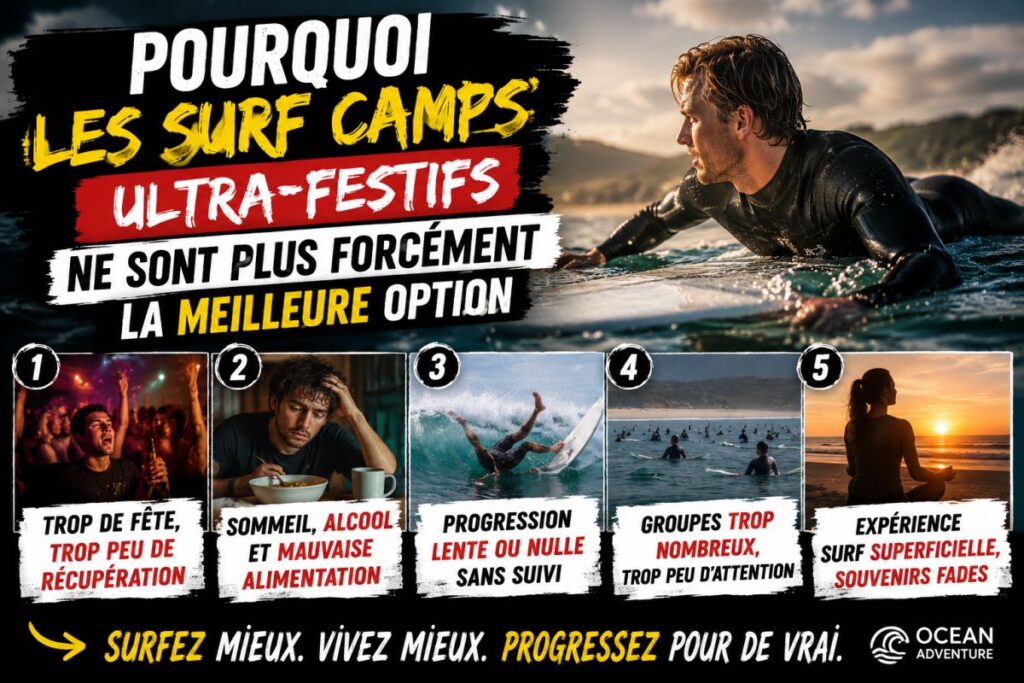
For a long time, you may have pictured the ideal surf camp as a postcard cliché: beers after the sessions, loud music echoing late into the night, packed dormitories, chronic tiredness, and difficult mornings before the next day’s surf session. That electric atmosphere certainly creates memories, but what about your progress? It often remained on hold, or was even questionable.
Over the last few years, there has been a real shift in the world of surfing.
More and more of you are looking for an experience that is more balanced, of a higher quality and, above all, in line with your actual progress.
You no longer just want to ‘get through the trip’; you want to come away a changed person. Let’s explore together this shift in mindset that applies to beginners and intermediate surfers alike.
Contenus de la page
The myth of the ‘party hard’ surf camp
Let’s be honest: when you’re 20, heading off to a surf house where you get very little sleep, where the parties go on one after the other and where everyone ends up barefoot at sunset has an undeniable magic about it. You make memories, you meet people, you experience a break from the everyday. But when your real aim becomes improving your surfing, the situation changes completely.
Surfing is a physically demanding sport. A two-hour session – especially if you’re a beginner or at intermediate level – involves several hundred paddle strokes, sustained cardiovascular exertion, constant balance on the board, as well as significant mental and cognitive exertion. These aspects are often underestimated by those who prioritise the festive atmosphere.
Add to that a lack of sleep, regular alcohol consumption, poor-quality meals and insufficient recovery, and you’ll soon find your body hitting a plateau. It’s not a question of willpower, but of biology.
Modern surfing has become a competitive sport
The image of the laid-back surfer who just goes with the flow still exists, but the reality of modern surfing is very different. Even amongst amateurs, the best progress is now based on a more structured approach, incorporating complementary practices. For example, you can incorporate yoga, mindful breathing and healthy eating habits into your daily routine to optimise your performance.
“You don’t just make progress in the water. Progress is also built up before the session, between sessions, and after the session.”
A surf camp focused solely on partying overlooks this essential aspect. Surfing sensibly is always better than surfing a lot. Studies in sports physiology show that recovery and a balance between exertion and rest are essential for maximising performance gains[1].
Not getting enough sleep means you won’t surf as well
Surfing requires explosive power, coordination, quick decision-making and total commitment to every wave. In other words, it demands that your mind is fully alert. However, a lack of sleep has a direct impact on several abilities that are essential to your surfing:
| Allocated capacity | Direct impact on the water |
|---|---|
| Concentration | Misjudging the waves and the spot |
| Balance | Unsteadiness on the board, frequent falls |
| Reflexes | Impaired rowing and take-off timing |
| Motor learning | Technical corrections do not take hold |
It is precisely for these reasons that the new generation of surf trips seek to strike a balance between socialising and recovery. The idea is not to take the fun out of it, but to create an environment in which you wake up feeling refreshed and ready to make the most of the best conditions. Neuroscience confirms that sleep improves motor memory and learning ability, both of which are crucial for making progress in surfing[2].
Alcohol: the false friend of the budding surfer
This is often a sensitive subject, but one that cannot be avoided. After a long session, a drink might seem well-deserved — and that’s perfectly understandable, as surfing creates a natural sense of euphoria that you want to prolong. However, when drinking becomes a regular habit, its effects on your body soon become apparent:
Muscle recovery is slowed down, hydration is compromised, deep sleep is disrupted, and joint inflammation can worsen. Many experienced surfers recognise that two or three nights of overindulgence in a week are enough to ruin the momentum of an entire holiday.
“Fun, yes. Constant excess, far less so.”
The changing expectations of online travellers
The 2010 version of the surf camp is no longer what you’re looking for today, in 2024. A large proportion of travellers have significantly changed their expectations. This shift is particularly evident among 28–45-year-olds, stressed-out working people, solo travellers seeking genuine connections, couples, and enthusiasts of sport and wellbeing.
What you’re looking for now is much more than simply ‘having had a browse’. You want:
- to make real progress, using appropriate methods,
- to enjoy an authentic experience, far removed from the holiday resort atmosphere,
- eat better and look after your body,
- unwind from the stresses of city life in a soothing natural setting.
Surfing is no longer just a sport; it’s a way of life. Your expectations evolve along with it. What’s considered ‘premium’ today is no longer non-stop partying, but rather getting a good night’s sleep, eating well, improving your skills and reconnecting with yourself.
“What do you really remember most about a surfing holiday? The third night of heavy drinking, or that wave you finally managed to ride after several days of struggling?”
‘Convivial’ does not mean ‘excessive’
Criticising ultra-party-oriented surf camps does not in any way mean advocating for austere, soulless holidays. Surfing remains, above all, a human adventure, and the atmosphere counts for a great deal. Shared meals, drinks at sunset on the beach, unexpected encounters, fits of laughter and passionate discussions after the sessions are often what make a holiday truly unforgettable.
However, there is a fundamental difference between being sociable and constant exhaustion. The right balance involves a rich and warm social life, without sacrificing your personal development or your energy for the next day.
Why we chose the Mind & Body approach
It is precisely in this spirit that we have created Surf & Yoga Hossegor. Our aim is to provide you with the best possible conditions to make rapid progress whilst enjoying an experience that is both fun and deeply human. Because the two are by no means incompatible.
You can surf seriously thanks to high-quality coaching, have lots of laughs and share memorable moments, enjoy delicious, healthy, home-cooked meals, experience unforgettable sunsets on Casernes Beach, and leave a better surfer than when you arrived.
“The ideal surf trip is no longer just about partying. It’s about experiencing an adventure that does you good: for your body, your mind… and your surfing.”