



Biarritz: The 10 Best Hotels Facing the Sea
2. How to choose your surfing accessories when you’re just starting out?
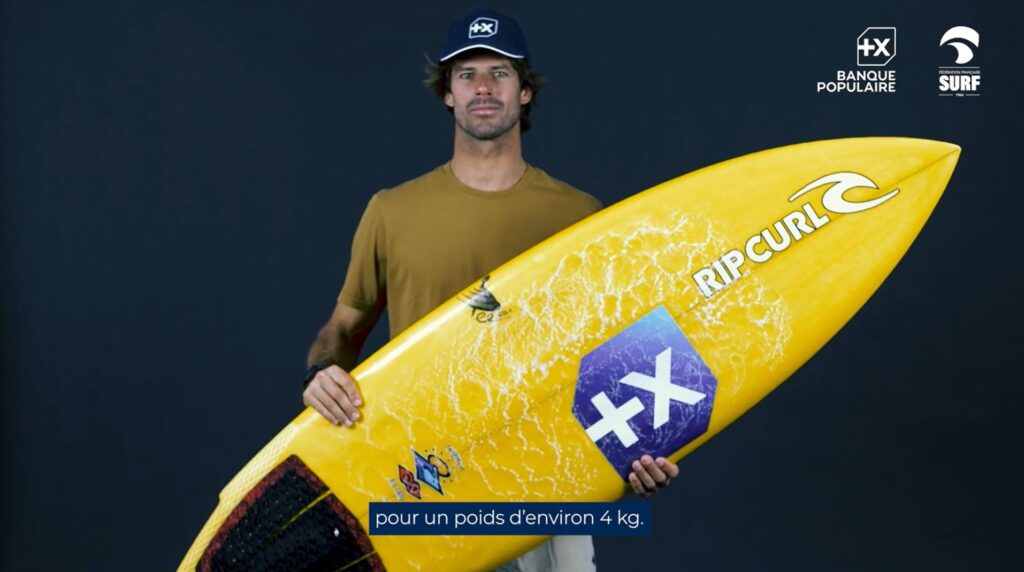
When you start surfing, you often dream of imitating the pros: standing up on a sharp shortboard, carving powerful turns and gliding through the hollows of the waves. But the reality of learning is quite different: to progress quickly and safely, you need the right equipment and professional guidance above all else.
The right board makes all the difference — it’s the difference between struggling for weeks and catching your first waves in a matter of days.
When starting out, the most common mistake is to want to buy a stiff, thin, short board — the kind you see under the feet of experienced surfers.
This is a bad idea. These boards are unstable, technical and dangerous for beginners and other surfers in the water.
👉 To get off to a good start, you need to:
- Take a few lessons with a qualified instructor to learn the basics: safety, positioning, reading waves.
- Use a foam board that is wide, thick and stable, with flexible plastic fins.
These offer tolerance, absorb shocks and allow you to fall without injuring yourself. - Avoid rigid boards when you’re starting out: they are prohibited for beginners in many schools for obvious reasons of collective safety.
🎯 1. Identify your level
First and foremost, you need to be honest with yourself about your surfing ability.
- Beginner: a long, wide and thick foam board. It provides stability and safety for learning to stand up and catch your first waves without stress.
- Intermediate: a rigid, progressive board. It retains buoyancy but allows you to start turning, generating speed and working on your trajectory.
- Advanced to expert: make way for shorter, sharper shortboards, designed for manoeuvrability and performance on powerful waves.
⚖️ 2. Adapt to your size
Your height and weight are essential factors.
The heavier you are, the more volume you will need in your board to float properly.
Conversely, a lighter person will be better suited to a thinner, more responsive board.
💡 Simple rule: a beginner should be able to lie completely flat on the board without the nose (front) sinking.
🌊 3. Consider the type of waves
Each spot has its own personality.
- For small, gentle waves: choose a long, voluminous board (such as a longboard or funboard).
- For powerful, hollow waves: opt for a short, responsive board.
This is the secret to enjoying every session, even when conditions change.



5 Things to do in Corralejo, Fuerteventura during your Surf Stay
Lire la suite