



Kitesurfing is an exciting outdoor activity that can be learned at any age. If you are looking for a new challenge or a way to disconnect from your daily routine, why not learn how to kitesurf?
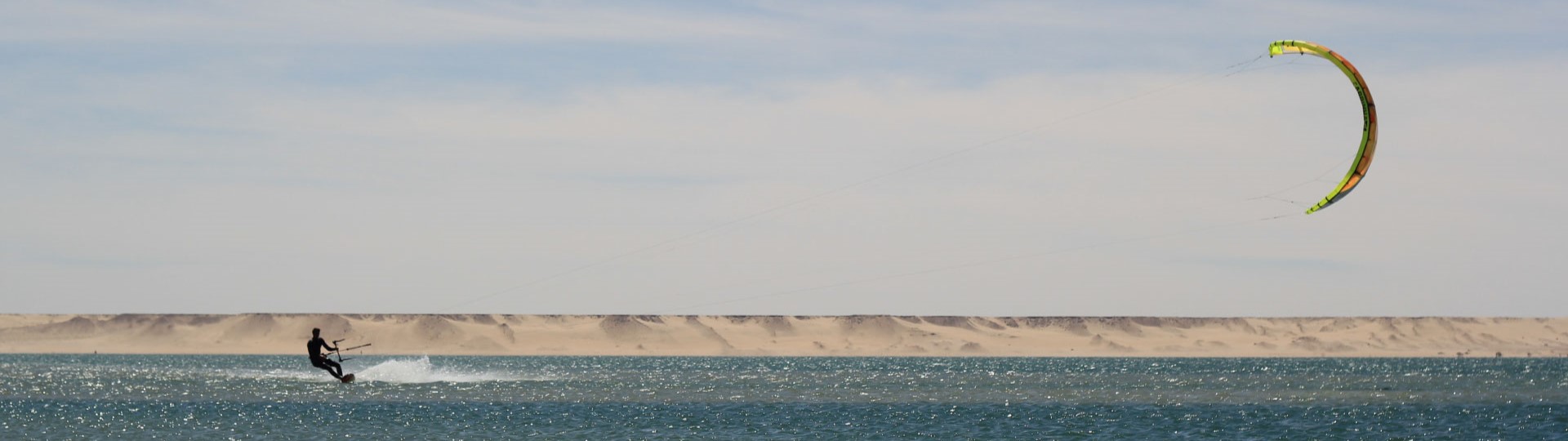
In this comprehensive guide, we will show you the steps you need to take to learn how to kitesurf effectively and safely. We will cover everything from the necessary equipment to the different techniques you need to master to become an experienced kitesurfer.
Advanced Level

Welcome to the world of advanced kitesurfing, where you will push your limits and discover extraordinary new sensations. At this stage, you have mastered the basics of kitesurfing and are ready to venture into more advanced techniques and manoeuvres.
Each step of the progression we will cover will allow you to explore new horizons and become an accomplished kitesurfer. Get ready for moments of adrenaline and wonder!
Kitesurfing lessons
There are several options for learning how to kitesurf, but group or private lessons with a qualified instructor are often the most effective for beginners. You can find local kitesurfing schools by searching online or asking friends who already practise this activity.
Kitesurfing lessons usually include theoretical training on the different techniques for flying the kite, as well as practical sessions at sea or in shallow water. Instructors will guide you through the learning process and provide you with advice on safety and kitesurfing techniques.
Regular practice
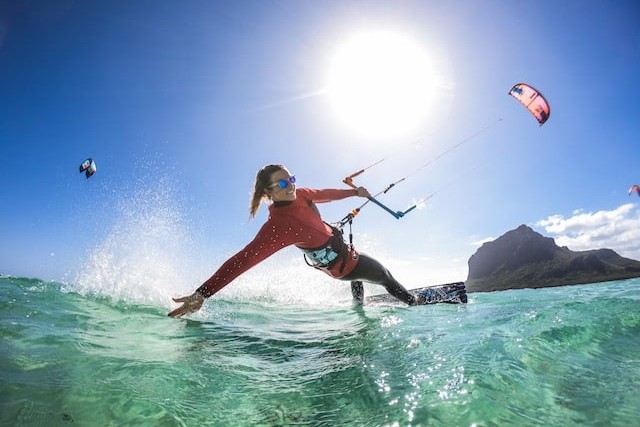
As with any newly learned sport, regular practice is essential to improving your kitesurfing skills. The more you practise, the more confident you will become in your abilities and the more you will be able to explore new techniques and challenges.
In conclusion, kitesurfing is an exciting and rewarding activity that can be learned at any age. By following the steps outlined in this guide, you can learn how to kitesurf effectively and safely. So why not embark on this adventure today?
Tacking :
Tacking is a fundamental manoeuvre in kitesurfing that involves changing direction by turning into the wind. This allows you to navigate efficiently in all directions and explore new spots. Learn to anticipate the right moment to tack based on wind and sea conditions. Master the coordination between your body movement, kite position and change of direction to execute smooth, controlled tacks. This technique will open up new perspectives in terms of navigation and possibilities on the water.
Practise tacking in moderate wind conditions and in open areas. Be patient and persistent, as this manoeuvre can be tricky at first. Practise regularly and analyse your performance to identify areas for improvement. With time and practice, you will be able to tack confidently and smoothly.

Basic jumps :
Basic jumps are one of the most exciting sensations in advanced kitesurfing. They allow you to gain altitude and experience a real feeling of freedom in the air. Start with simple jumps, using the power of your kite to propel yourself. Learn to control your landing by cushioning the impact with your legs. Gradually, you can experiment with more advanced tricks, such as grabs and rotations. Jumps are a fantastic way to push your limits and explore your creativity on the water.
Ensure you are comfortable with the waterstart technique and power control before attempting jumps. Practise in steady wind conditions and allow sufficient space to land safely. Remember to use appropriate equipment and follow safety rules. Start with modest jumps and progress at your own pace. Pay attention to your positioning and balance during jumps to maximise your height and control.
360s :
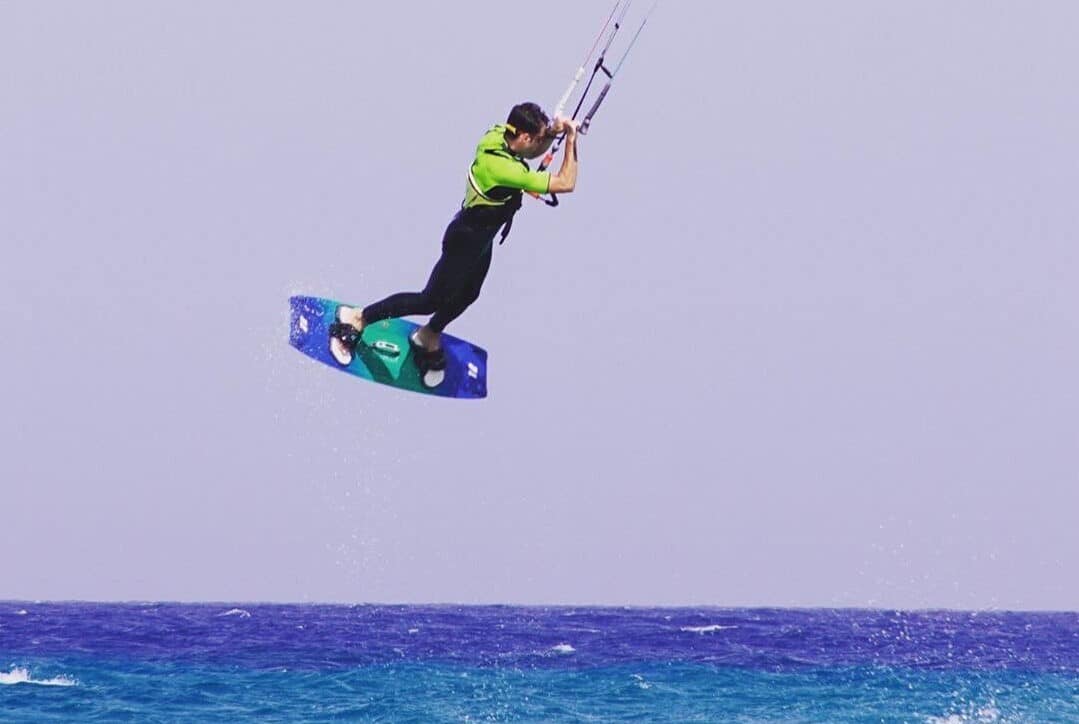
360-degree rotations are a natural progression after mastering basic jumps. This manoeuvre involves performing a complete rotation while in the air. The key to successful 360s is to combine the movement of your body with the movement of your wing.
Focus on coordinating your rotational movements with the timing of your kite to maintain balance and stability. Start with slow, controlled rotations and progress to faster, more fluid rotations. 360s add an artistic dimension to your kitesurfing style and allow you to push the boundaries of your creativity.
Before attempting 360-degree rotations, make sure you have mastered basic jumps and have good coordination between your body and your kite. Practise in open water and avoid obstacles. Pay attention to your positioning and balance throughout the rotation. Practise regularly to develop fluidity of movement and ease in 360s.
Free flying :
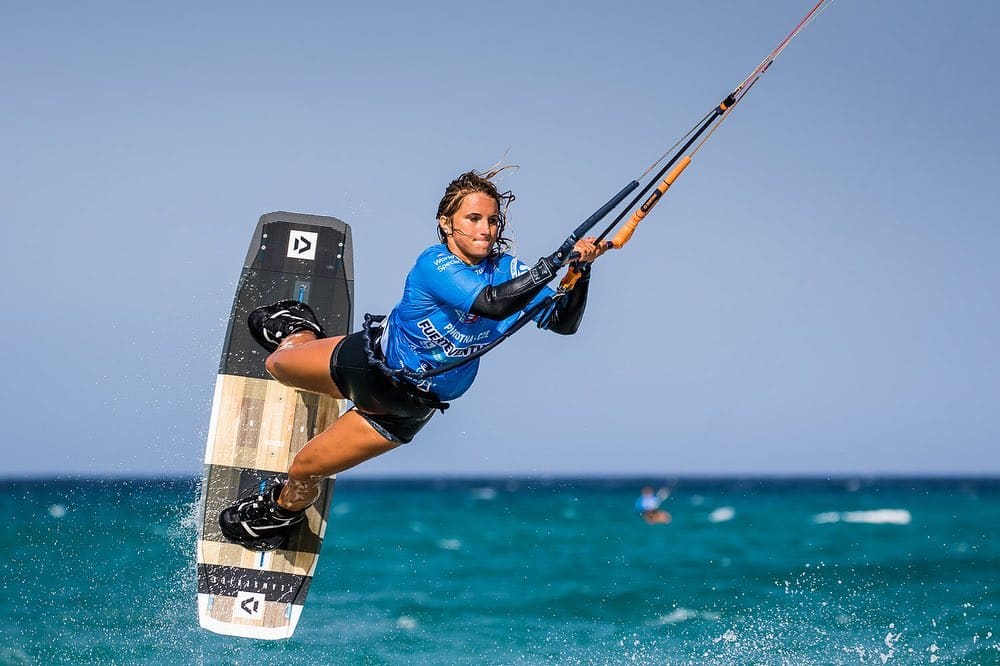
Free flying is the ultimate stage in advanced kitesurfing progression, where you push the limits of your freedom and creativity on the water. This phase allows you to explore customised tricks and acrobatic manoeuvres. You are free to mix jumps, rotations, transitions and aerial tricks to create your own unique style. Free flying gives you the opportunity to fully express yourself as a kitesurfer and experience intense and unforgettable sensations.
Free flying requires a solid grasp of the above techniques and a high level of confidence in your skills. Don't be afraid to try new manoeuvres and step outside your comfort zone. Practise in suitable wind conditions and make sure you follow the safety rules. Pay attention to your positioning and balance, and don't hesitate to seek professional advice to perfect your free flying skills.
As an advanced kitesurfer, the key to your progress lies in regular practice, perseverance and a willingness to push your limits. Keep training, take part in practice sessions and surround yourself with other kitesurfing enthusiasts to share your passion. Be open to constant learning and exploring new techniques. Make the most of every moment on the water to enjoy unique experiences and push the boundaries of your kitesurfing.
It is important to note that the stages of progression may vary depending on specific training programmes and teaching methods. The International Kiteboarding Organisation (IKO) is a renowned organisation in the kitesurfing industry and provides standards and guidelines for kitesurfers' learning and progression. Their training programmes can be used as a reference for the stages of progression.
However, it is essential to consult a qualified and experienced instructor for personalised advice tailored to your level and specific needs. An IKO-certified instructor or a recognised kitesurfing school can guide you through the different stages of progression safely and effectively.
It is also important to note that kitesurfing involves risks and that it is essential to follow safety rules, wear appropriate equipment and sail in conditions suited to your skill level.
The best destinations for learning kitesurfing?
Fuerteventura, Canary Islands: This is a popular destination for kitesurfing and offers a variety of options for all budgets, from luxury hotels to youth hostels, kite camps and family apartments. Discover different types of kitesurfing holidays near the best kitesurfing spots, between Corralejo, El Cotillo and Sotavento.
reserve button
dakha
reserve button